The Beljanski Foundation: Natural Compounds, Cancer Research, and the Future of Integrative Care
A conversation with Sylvie Beljanski about her father’s scientific legacy, plant-based research, and the role of integrative medicine in cancer support.
Cancer care is one of the most complex areas of medicine. It requires expertise, discernment, and often a team-based approach that may include conventional oncology, functional medicine, nutrition, lifestyle support, and carefully selected integrative therapies.
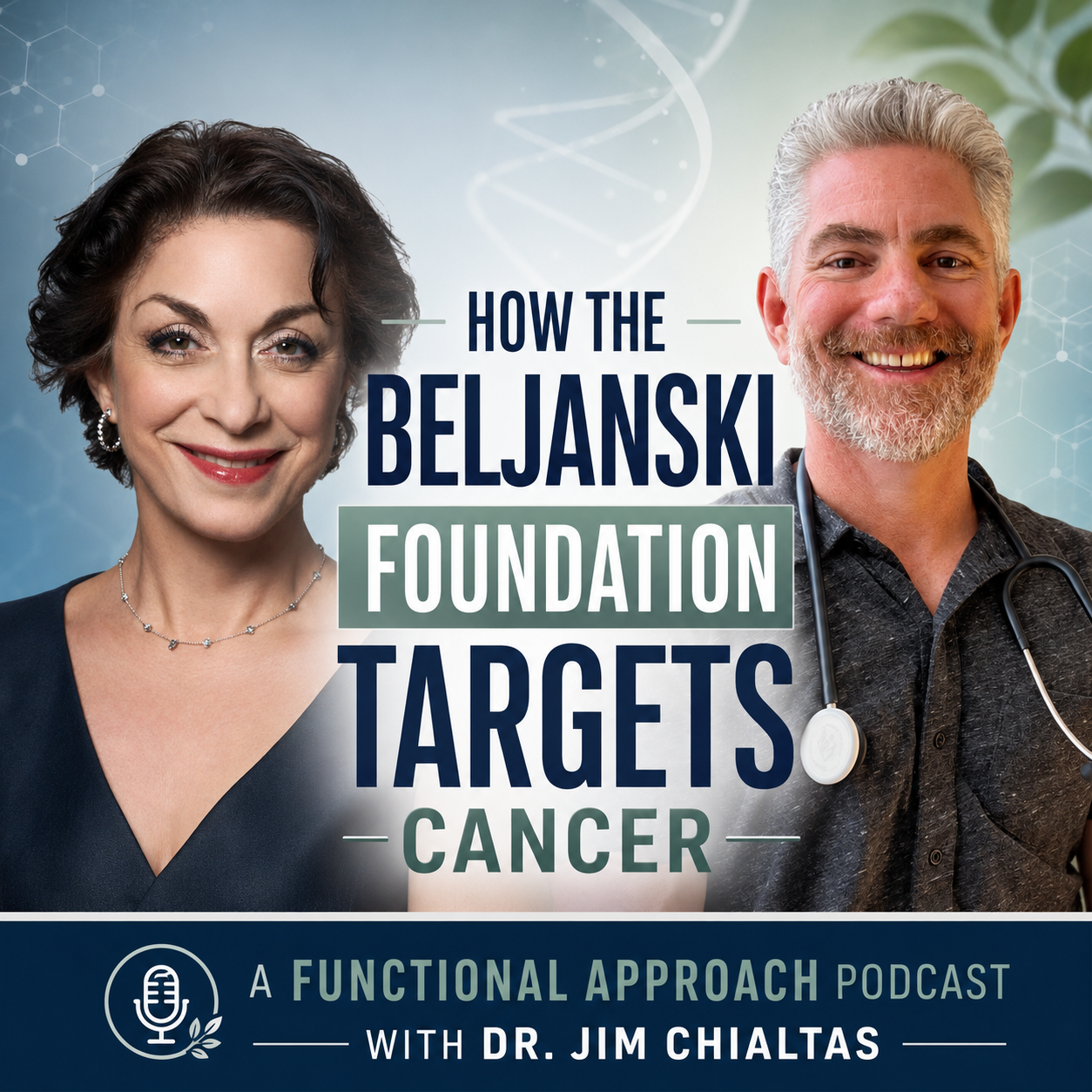
In a recent episode of A Functional Approach, Dr. Jim Chialtas spoke with Sylvie Beljanski, Vice President of The Beljanski Foundation, about her father’s research, the Foundation’s ongoing work, and the natural compounds being studied for their potential role in cancer support.
The conversation covered a lot: environmental toxins, DNA destabilization, cancer stem cells, botanical extracts, immune support during chemotherapy, and the upcoming Beljanski Integrative Cancer Conference in San Diego.
At the heart of it all is one question:
Can nature offer targeted support to the body without adding more toxicity?
The Story Behind the Beljanski Foundation
Sylvie Beljanski did not originally plan to work in health advocacy. She was trained as an attorney and was working in New York when a dramatic event in France changed the course of her life.
Her father, Dr. Mirko Beljanski, was a molecular biologist who worked at the Pasteur Institute in Paris. His research focused on DNA, environmental toxins, and the ways certain natural compounds appeared to interact differently with healthy cells versus cancerous cells.
After his death, Sylvie founded The Beljanski Foundation in the United States in 1999 to help preserve and continue his scientific legacy.
According to The Beljanski Foundation, its mission is to support research into natural, non-toxic approaches related to cancer and chronic disease. The Foundation states that it has helped fund research programs for more than 20 years. (The Beljanski Foundation)
DNA, Environmental Toxins, and Cancer
One of Dr. Beljanski’s key ideas was that cancer could not be understood only as a genetic disease.
He was interested in how environmental toxins may affect the structure of DNA. In the podcast, Sylvie explained that her father developed a test called the Oncotest, which he used to examine differences between healthy DNA and cancerous DNA.
His theory was that cancerous DNA showed areas of destabilization, or openings between the two strands of DNA. This led him to search for natural compounds that might selectively interact with those destabilized areas.
This is one of the core concepts behind the Beljanski approach:
selectivity.
Instead of trying to broadly attack the body, the goal is to identify compounds that may act differently in unhealthy cells than in healthy ones.
The Key Natural Compounds Discussed
Sylvie discussed several natural substances connected to her father’s research and the Foundation’s ongoing work.
These include:
Pao pereira
Rauwolfia vomitoria
Golden leaf ginkgo biloba
A specific blend of green teas
RNA fragments derived from E. coli K12
Maison Beljanski, the company associated with Beljanski products, lists these same ingredients as part of the Beljanski line of dietary supplements and teas. (Maison Beljanski)
Pao Pereira and Rauwolfia Vomitoria
Two of the most discussed botanicals in the episode were Pao pereira and Rauwolfia vomitoria.
Sylvie explained that Dr. Beljanski focused on these extracts because of their apparent ability, in his research model, to interact with cancerous cells while leaving healthy cells alone. The Foundation’s website describes ongoing research into these extracts across several cancer-related areas, including prostate, pancreatic, ovarian, breast, melanoma, and cancer stem cell research. (The Beljanski Foundation)
One important point from the conversation: Rauwolfia vomitoria must be properly prepared. Sylvie emphasized that the extract used in Beljanski research is reserpine-free, since reserpine can have pharmacological effects and potential toxicity.
This is a good reminder that “natural” does not automatically mean safe or appropriate for everyone. Quality, preparation, dosage, and clinical oversight matter.
Cancer Stem Cells and Recurrence
One of the more fascinating parts of the conversation involved cancer stem cells.
Cancer stem cells are a topic of growing research interest because they may play a role in recurrence, metastasis, and resistance to conventional therapies. Unlike many rapidly dividing cancer cells, cancer stem cells may divide slowly, which can make them harder for certain treatments to target.
The Beljanski Foundation has supported research into how Pao pereira and Rauwolfia vomitoria may affect cancer stem cells. A published study available through the National Institutes of Health investigated these plant extracts for activity against ovarian cancer stem cells in laboratory and animal models. (PubMed Central)
This is not the same as saying these extracts are proven cancer treatments in humans. But it is part of a larger research conversation about how integrative compounds may one day support more comprehensive cancer strategies.
Golden Leaf Ginkgo Biloba
Most people know ginkgo biloba as a botanical associated with brain and circulation support. But Dr. Beljanski was specifically interested in golden leaf ginkgo, meaning leaves harvested after they turn yellow.
According to Sylvie, Dr. Beljanski became interested in ginkgo after learning that it was among the first trees to grow back after the bombing of Hiroshima. He began studying what made the tree so resilient.
In the podcast, Sylvie explained that this specific golden leaf extract was studied for its potential role in radiation-related support, particularly in relation to skin and tissue effects.
The Foundation also references research into golden ginkgo leaf extract and its potential cancer-related mechanisms. (The Beljanski Foundation)
Green Tea and OnkoTea®
Green tea also came up in the conversation.
Sylvie shared that Dr. Beljanski tested a variety of teas using his Oncotest and identified a specific combination of green teas that appeared promising in his model. This later became known as OnkoTea®.
Maison Beljanski describes OnkoTea® as a blend of organic green teas selected by Dr. Mirko Beljanski and supported by research. (Maison Beljanski)
Again, the key here is specificity. The conversation was not about generic green tea as a cure-all. It was about a particular blend selected and studied within the Beljanski research framework.
RNA Fragments and Immune Support
Another unusual topic was the use of RNA fragments.
Sylvie explained that these fragments are derived from E. coli K12, a non-pathogenic strain of bacteria naturally present in many people’s intestines. These RNA fragments are not the same as mRNA. In Sylvie’s words, they are not delivering a message. They are intended more as a nutritional support for the bone marrow.
The idea is that during chemotherapy, rapidly dividing cells can be affected, including white blood cells and platelets. Sylvie described research into whether these RNA fragments may help support platelet and white blood cell production during chemotherapy.
This is an area where anyone undergoing cancer treatment should work directly with their oncology team and a knowledgeable integrative practitioner. Immune and platelet support during chemotherapy is medically significant and needs careful coordination.
Integrative Does Not Mean Either/Or
One of the most important themes in this episode was that integrative medicine does not have to mean rejecting conventional care.
In fact, Sylvie emphasized the importance of studying how natural compounds may work alongside conventional treatments. The Foundation describes research into synergistic effects between certain plant extracts and chemotherapy in preclinical settings. (The Beljanski Foundation)
This is where integrative medicine can be most useful: not as a replacement for oncology, but as a thoughtful, evidence-informed layer of support.
Dr. Jim echoed this idea in the conversation. Conventional medicine can be lifesaving and necessary, but patients often want to support the whole person too: the immune system, inflammation, resilience, recovery, quality of life, and the terrain in which disease developed.
The Beljanski Integrative Cancer Conference
Sylvie also shared details about the upcoming Beljanski Integrative Cancer Conference, which will take place June 26–29, 2026, in San Diego, California. The event is listed as a three-day conference with educational sessions, panels, exhibits, networking, and both in-person and virtual attendance options. (The Beljanski Foundation)
According to the conference site, proceeds support additional cancer stem cell research, including research focused on prostate cancer stem cells. (Beljanski Cancer Conference)
For patients, caregivers, and health professionals interested in integrative cancer support, this may be a valuable opportunity to learn from researchers, clinicians, and companies working in this space.
A Thoughtful Word of Caution
Cancer is serious. No supplement, botanical, tea, or natural product should be used as a substitute for appropriate medical care.
If you are currently being treated for cancer, recovering from cancer, or supporting a loved one through treatment, always discuss supplements and integrative therapies with your oncology team and a qualified practitioner. This is especially important during chemotherapy, radiation, surgery, immunotherapy, or when blood counts, liver function, kidney function, or medications are involved.
The goal is not to guess.
The goal is to build a thoughtful, coordinated plan.
Final Thoughts
This conversation with Sylvie Beljanski offers a fascinating window into a different kind of cancer research: one focused on selectivity, cellular terrain, environmental influence, and natural compounds that may support the body in specific ways.
It also highlights a larger truth that applies far beyond cancer care:
The body is not just a collection of symptoms. It is an ecosystem.
And when we support that ecosystem intelligently, carefully, and with respect for both science and nature, we may open the door to better outcomes, better resilience, and a more humane model of care.
Interested in a more personalized, root-cause approach to your health?
Dr. Jim Chialtas offers functional medicine consultations for people dealing with complex, chronic, or unresolved health concerns. Schedule a free 15-minute consultation to see whether this approach is a good fit for you.